
Posted on: October 08, 2026
SNE General Assembly 2026: Strengthening Collaboration to Address Europe's Nutrition Challenges
The Specialised Nutrition Europe (SNE) General Assembly, held in Brussels on 29-30 September 2026, brought together representatives from national associations and companies across Europe to reflect on the year's achievements, discuss emerging policy and scientific developments, and shape priorities for the years ahead. The event highlighted both the strength of the SNE network and the growing importance of collaboration in addressing complex nutrition and health challenges.
The meeting opened with a review of SNE's achievements over the past year, alongside the annual SNE Award ceremony. National associations showcased innovative initiatives from across Europe, with the Portuguese project focused on improving access to clinical nutrition receiving the SNE Award 2026. Delegates also received updates on SNE's strategic priorities and ongoing work programmes, underlining the organisation's commitment to advancing specialised nutrition through science-based advocacy and engagement.
Focus on Policy, Regulation and Public Health
Alongside the formal General Assembly business, members received updates from several of SNE's active workstreams, including baby foods, Foods for Special Medical Purposes (FSMPs) and food safety.
One of the most engaging sessions was the discussion on Hidden Hunger 2030 by Professor Kevin Cashman, which examined the continuing challenge of micronutrient deficiencies worldwide. Despite significant progress in nutrition and healthcare, micronutrient inadequacies remain a major public health concern. The session reinforced the importance of ensuring access to appropriate nutritional solutions for vulnerable populations and the role that collaboration across healthcare, academia and industry can play in addressing these challenges.
A further highlight was a session focused on the growing debate around ultra-processed foods (UPFs). Presented by Professor Ciarán Forde, the session explored current research, public perceptions and the increasing attention being given to food processing within nutrition policy discussions. Delegates considered the need for balanced, evidence-based approaches when evaluating the role of processing and recognising the important contribution specialised nutrition products can make to health and wellbeing.
Medical Nutrition in the Spotlight
The second day of the General Assembly shifted the focus towards medical nutrition and the evolving healthcare landscape.
Delegates heard a series of presentations covering developments in medical affairs, highlighting the growing importance of scientific engagement, evidence generation and effective communication in supporting patient care and informing policy decisions.
A key session provided national perspectives on current priorities and challenges. Representing BSNA, Natasha Bye, Chief Executive Officer of BSNA, introduced the session by setting the context for the sector and outlining the changing environment in which specialised nutrition operates. The BSNA presentation was then delivered by Martha Jackson, Medical Nutrition and Policy Manager, who spoke about the importance of building trust through transparency, evidence, shared goals and perseverance in ensuring that patients continue to receive the nutritional support they need.
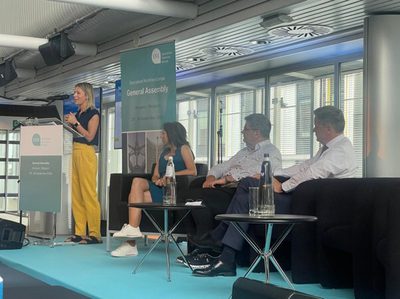
Delegates also heard perspectives from Germany, including the process it has taking to have mandatory screening for malnutrition in Germany, and the importance of identifying patients at risk of malnutrition earlier in their care pathway. The session highlighted the need for greater awareness of malnutrition as a significant healthcare challenge across Europe.
The General Assembly concluded with discussions on one of the most significant emerging topics in healthcare and nutrition: GLP-1 slimming medicines and the impact on the specialist nutrition sector.
As the use of GLP-1 medicines continues to expand, delegates explored the potential implications for nutritional status, dietary habits and patient support. The session generated considerable interest, highlighting both the opportunities and challenges that these therapies present for healthcare systems and the specialised nutrition sector.
A Shared Commitment to Collaboration
Throughout the two-day programme, a common theme emerged: the importance of collaboration. Whether discussing regulatory developments, hidden hunger, malnutrition screening, medical nutrition or emerging therapies, delegates repeatedly emphasised that progress is most effective when stakeholders work together.
The 2026 SNE General Assembly demonstrated the value of bringing member states together to share experiences, learn from one another and collectively address the nutrition challenges facing Europe. As healthcare needs continue to evolve, trust, scientific evidence and constructive collaboration will remain central to ensuring specialised nutrition continues to improve outcomes for patients.